Shade initiative drives better welfare and performance
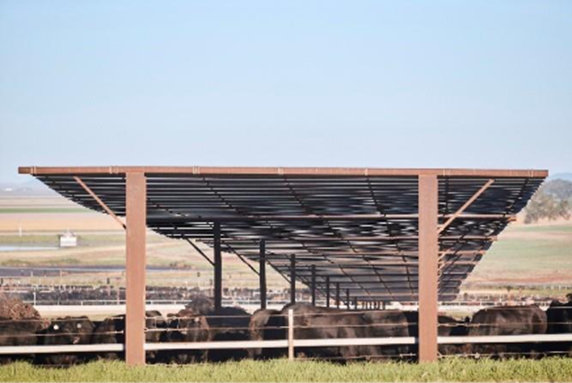
Caption: JBS Caroona Feedlot
In December of 2025, the Australian Lot Feeders’ Association (ALFA) released a report on their Shade Initiative. The findings in the report highlight the industry’s commitment to cattle welfare, productivity and continual improvement with 75.1% of feedlot cattle capacity now being under shade.
ALFA’s Shade Initiative – our journey towards having all feedlot cattle with access to shade report highlights strong industry-wide progress towards shade adoption since 2020 when it was first launched.
Linking strongly to the ABSF’s pillar of animal health and welfare – which is focused on the application of the five domains of nutrition, environment, health, behaviour and mental state – ALFA’s Shade Initiative seeks to advance animal welfare, production efficiency and long-term sustainability by encouraging shade and covered housing infrastructure adoption within Australian feedlots.
“Shade access across National Feedlot Accreditation Scheme (NFAS) feedlot constructed capacity has increased from 56.3% in 2020 to 75.1% today – more than 1.32 million cattle in feedlots have access to shade,” Grant Garey, ALFA president, said.
“Compared to 2020, an additional 518,305 cattle are now housed in shaded pens at any one time. Accounting for multiple turns per year, this represents 2,584,861 head of cattle that have benefited from new shade installations.”
Given the significant construction and supply chain disruptions experienced during the pandemic period, including material shortages, rising building costs and labour constraints; and the simultaneous expansion of total national feedlot capacity, the steady growth seen over the past five years is notable.
While shade installation is voluntary, adoption continues to grow annually, demonstrating the strong commitment to the welfare of the cattle in feedlots, especially as construction costs continue to rise.
Having shade available to cattle can make a real impact on how they are able to regulate their own temperature, in turn helping to support a positive welfare outcome for the animals.
“Shade enables cattle to express natural behaviour through thermo-regulation, improves comfort, and reduces the risk of heat-related impacts in relevant climates.”
“Australian feedlot operators have embraced these welfare benefits, supporting the industry’s commitment to the Five Domains model and continual improvement in animal welfare,” Mr Garey said.
Not only positive gains in welfare but also productivity
“The cumulative impact of 2,584,861 cattle with access to shade from 2020 has been estimated at an additional return of $67.67m to Australian lot feeders.”
Led by ALFA and supported by Meat & Livestock Australia (MLA) – using grainfed levies matched by Australian Government investment – the initiative has accelerated commercial adoption and investment across a diverse range of feedlot operations and climatic regions.
“ALFA has supported feedlot operators through a comprehensive extension and communication campaign, reaching over 3,000 feedlot personnel via 57 activities including four face-to-face training events, four webinars, 42 workshops, six major events, one in-field bus tour, and more than 500 feedlot visits since 2020,” Mr Garey said.
MLA – in partnership with ALFA – has invested $3,574,225 in shade research since 2008, with a further $2,471,000 dollars currently invested in ongoing research, aimed at advancing our scientific knowledge of shade benefits for cattle welfare and productivity.
“Looking ahead, feedlot operators surveyed plan to continue investing in shade and shelter infrastructure, with cattle under shade estimated to rise to approximately 83.5% of total constructed capacity by the end of 2026 and 85% by 2029.”
“ALFA’s Shade Initiative has been a major undertaking for the Association and the feedlot industry. The growth in shade infrastructure signals our sector’s commitment to welfare, productivity, drive for continuous improvement, and a long-term sustainable future,” Mr Garey concluded.
More information
Contact:
Niamh Bartley – ALFA Marketing & Communications
Jacob Betros
Resources: